








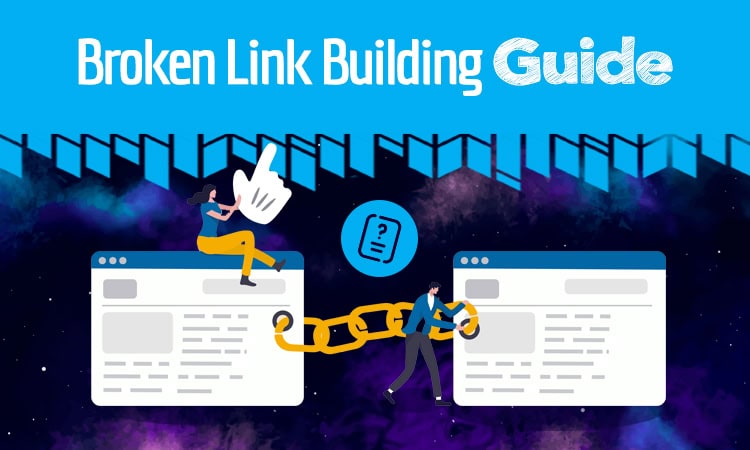
There are thousands of broken link building guides already published. Most of them overcomplicate the process or bury the valuable part under theory and sales copy.
This guide does the opposite and explains what broken link building is, how to do it correctly, and how to avoid wasting time chasing links that were never worth earning in the first place.
What Is Broken Link Building?
Broken link building starts with a simple reality. Content ages. Sites shut down. URLs change. Links break.
When a page links to a resource that no longer exists, it creates a dead end for readers. Most site owners want those fixed. They just don’t know the links are broken.
If you can provide a legitimate replacement for the missing resource, you give the site owner a reason to update the link. When done correctly, broken link building earns editorial links that are relevant, contextual, and stable.
Finding Broken Link Opportunities That Actually Convert
Most broken link campaigns fail for one reason. The replacement content does not match the original context closely enough.
This is the one-to-one replacement rule. If a site linked to a specific statistic, study, or reference, your content must serve the same purpose. You cannot replace a narrowly cited resource with a general guide and expect results.
Here’s what a real replacement looks like.
If the broken link points to an old university PDF studying how distracted driving affects reaction times, your replacement should cover that same topic with current data. A fresh article or visual that addresses the same question gives the site owner an easy decision. They keep their article intact and fix the broken citation at the same time.
When the fit is obvious, the link update happens naturally.
When to Walk Away
Not every broken link is worth your time. Knowing when to stop is part of doing this efficiently.
- If the page with the broken link gets no traffic, fixing it won’t move the needle.
- If the anchor text is extremely specific and swapping in your link would require rewriting the sentence, most site owners won’t bother.
- If the page links out to dozens of unrelated sites, you’re looking at a link farm, not an editorial opportunity.
Walking away early saves more time than any tool ever will.
Moving Beyond Page-by-Page Hunting
Looking for broken links one page at a time works, but it’s slow.
A better approach is to identify dead resources that were once widely cited in your niche. These are guides, studies, or tools that were heavily linked to before being deleted or moved.
When a resource like that disappears, many sites keep linking to it without realizing it’s gone. By identifying one dead URL and checking who still links to it, you uncover an entire list of relevant prospects in one shot.
This shifts broken link building from scavenger hunting to targeted prospecting.
How to Frame the Outreach
Most broken link emails fail because they read like link requests.
The outreach should be framed as a heads-up, not a pitch. You’re pointing out a broken citation and offering a replacement that serves the same purpose. That’s it.
Mention the exact page you were reading and the specific resource that’s broken. Keep the email short. When the replacement makes sense, you don’t need to convince anyone.
Qualifying the Link Before You Reach Out
Not all links are worth chasing.
Relevance matters more than metrics. A smaller site that lives squarely in your niche is often more valuable than a high-authority site with loose topical alignment. Pay attention to how many outbound links are on the page. Pages overloaded with links rarely pass meaningful value.
Also check whether the page is actually connected to the rest of the site. If it’s buried several layers deep with no internal links pointing to it, the payoff is limited.
A Simple Workflow That Holds Up
- Start by finding broken outbound links on sites that matter in your niche.
- Confirm what the original content was meant to support so you understand the context.
- Create or use a replacement that fulfills the same role.
- Then reach out with a short email that points out the issue and suggests the fix.
Once you land a few links and see how site owners respond, you can use tools to speed things up. Scale what works instead of chasing every advanced tactic you read about.
Don’t Make This Your Only Strategy
Broken link building works, but it should never stand alone.
Strong link profiles are built through a mix of tactics. Broken link replacement, resource page links, brand mentions, and selective guest post contributions all play a role. The right approach depends on the page you’re promoting and the type of site you’re trying to earn links from.
If you want this handled without wasting time or burning relationships, that’s what we do. Get in touch to learn more about how Stellar SEO’s link building services can help your business.