






MUVERA, GFNs, and the Fall of Keyword-First SEO
(Executive Summary)
Google no longer ranks pages by keyword matching. MUVERA evaluates how completely a source covers a topic across multiple vectors. Entity clarity, co-occurrence, and vector alignment now determine visibility, with keywords acting as a secondary signal.
Generative Flow Networks reward Information Gain and suppress redundant content, regardless of optimization.
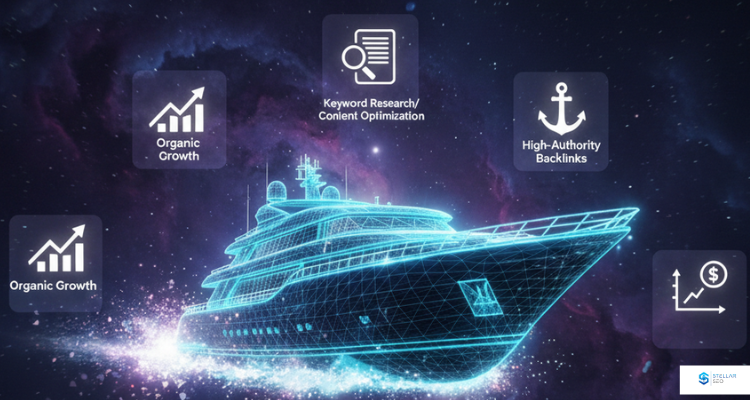
Stellar SEO solves this by combining entity definition, high-density content, and entity-driven link building into a unified authority system. By reinforcing Knowledge Graph relationships, validating expertise through third-party sources, and maintaining cross-platform consistency, our Unified Entity Domination framework builds a semantic moat that AI-driven ranking systems trust before keywords ever matter.
The Shift From Keyword Matching to Entity-Based Understanding
If you still treat keywords as the primary ranking lever in 2026, you are using a model that Google no longer rewards. Keywords did not die, but their influence weakened. A keyword without entity clarity, co-occurrence signals, and a stable position in the Knowledge Graph no longer carries ranking strength in competitive markets.
Google now evaluates how well your page fits into known entity relationships, not whether it repeats a specific phrase. MUVERA and GFNs shifted search away from a text retrieval system to a system that evaluates pages through multiple vectors and entity relationships.
This change explains why in ultra-competitive niches, even well-executed link building and on-page SEO may need additional reinforcement to break away from the pack.
Here are the key concepts you need before we go deeper.
Key Definitions for the New Search Environment
Entity
Anything Google treats as a distinct, identifiable ‘thing’. Examples include pharmaceutical drugs, defendants in litigation, medical conditions, corporations, brands, and geographic locations. Entities matter because Google ranks based on meaning and relationships, not strings of text.
Knowledge Graph
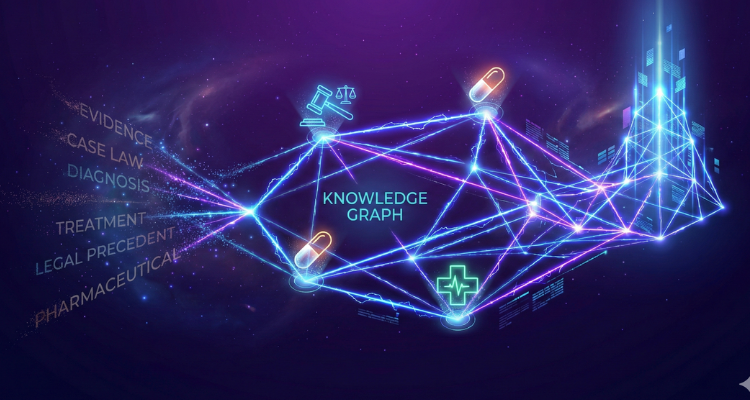
The Knowledge Graph is Google’s system for storing entities and the relationships between them. It understands how a drug relates to a condition, how a corporation relates to an MDL, and how a procedure relates to specific risks. Rankings depend on how clearly your content and links reinforce these relationships.
Co-Occurrence
The pattern of related entities appearing together across authoritative sources. If your page uses the right keyword but lacks the surrounding entities commonly associated with the topic, Google treats it as low-confidence or incomplete.
Fan-Out Queries
The expansion of a single user query into multiple related sub-queries that Google or AI systems evaluate in parallel. Each fan-out path activates and tests specific entity relationships inside the Knowledge Graph, measuring co-occurrence patterns and information gain before an answer is produced.
Multi-Vector Retrieval
Google’s method of representing a single document using multiple semantic vectors instead of one. This allows Google to interpret a page through each of its subtopics. MUVERA is the first major implementation of this system [1]. Here’s a simple analogy to better understand why this matters:
-
Single Vector: Treats a page like a smoothie (all flavors blended into one taste).
-
Multi-Vector (MUVERA): Treats a page like a fruit salad (you can still find and pick out the specific chunks of pineapple, melon, or grape).
Generative Flow Networks (GFNs)
Models that surface answers by mapping probability distributions rather than selecting one correct result. GFNs reward what is new, not what already exists. [2]. To simplify, you can think about like this:
-
Standard AI: Treats the problem like a Race (only the winner matters).
-
GFN: Treats the problem like a Dinner Party (everyone is invited, but the most interesting people get the most attention).
Information Gain
The measure of how much new or distinct information a page contributes to a topic. GFNs reward content that expands the model’s understanding, introduces context not found in existing sources, or provides novel data. If your content repeats what is already known, Information Gain is low. Original datasets, unique angles, and ongoing updates produce high”information gain” signals.
These definitions form the backbone of the ranking system Google uses today.
1. Why Keywords Lost Power Without Entity Clarity
Keywords remain signals, but they are no longer the drivers of rank. A keyword is only valuable when supported by:
- Entity clarity
- Relevant co-occurrence patterns
- Established relationships in the Knowledge Graph
Without those elements, Google discounts the keyword. This explains why well-written, keyword-optimized articles fail in legal, medical, pharmaceutical, or financial markets. The model must know who is speaking, what entities the page relates to, and whether those relationships align with the broader topic ecosystem.
Today, the real hierarchy is:
Entity → Co-Occurrence → Vector Alignment → Keyword
Keywords still matter, but only after the model verifies your place in the graph.
2. MUVERA and the Collapse of the Single Vector Era
For years, Google attempted to compress each document into a single vector. This forced complex topics such as drug liability, medical science, corporate negligence, and class-action procedure into a single oversimplified representation.
In 2025, Google introduced MUVERA, a multi-vector retrieval system that represents each document with multiple semantic vectors rather than a single vector [1]. Each vector corresponds to a different conceptual angle of the content.
What This Means for SEO
Your page now competes across all dimensions relevant to the subject. A mass tort page participates simultaneously in the pharmaceutical, medical, corporate accountability, and legal contexts.
If your backlink profile hits only one of those vectors, such as general legal directories, you lose to competitors with links from medical journals, consumer safety publications, addiction recovery authorities, or corporate governance sources.
This means Vector Depth is a key component of ranking well in modern search. Google no longer categorizes a page as just one thing. Instead, it looks for pages that possess authority across multiple intersecting topics that define the subject. Vector Depth is the density of these relevant intersections.
3. GFNs and the Probability-Based Ranking System
Until recently, Google relied on Graph Neural Networks (GNNs) to interpret relationships inside the Knowledge Graph. GNNs excelled at classification and entity understanding, but they were limited in handling multi-answer queries, topic completeness, and novelty detection.
Beginning in late 2023 and continuing through 2024 and 2025, Google shifted from GNN-dominant ranking to GFNs. GNNs still manage entity structure, but GFNs now govern how answers are weighted, composed, and surfaced in both Search and AI Overviews.
GFNs evaluate content based on probability flows, not on string matching or single-label classification. They identify the most likely answers across the topic. [2].
Why Redundant Content Fails
If ten law firms publish identical drug-injury guides, the GFN detects no information gain. It surfaces the oldest or most authoritative version and suppresses the others. Producing content that looks like what already exists means less visibility. We developed the Legal Entity Mastery System to combat this, while clearly defining the firm as a trusted entity.
The same logic applies outside legal content.
If ten yacht brokers copy the same manufacturer description for a Sunseeker 90, the GFN sees zero value. But if one broker adds unique performance data, a video walkthrough of the engine room, and a comparison to the Azimut Grande, they provide Information Gain. Whether you are selling a Mass Tort or a Mega Yacht, the algorithm demands novelty.
Why Novelty, Data, and Distinct Updates Win
GFNs reward content that expands the model’s understanding of a topic. Proprietary data, new angles, and frequent updates increase the likelihood that your content will be selected for AI Overviews and search results. Novel information is now a ranking signal.
4. The Knowledge Graph Replaced the Keyword List
Google ranks based on relationships. The Knowledge Graph determines whether your content reflects how entities relate in the real world. When your content and links validate these relationships, Google treats you as a credible node within the topic cluster. When they do not, keywords lose their power.
The “Execution Gap” in Identifying Entities
Many teams struggle here. They identify the “keyword,” but fail to map the surrounding entity clusters—the specific judges, medical side effects, corporate subsidiaries, and regulatory bodies that Google’s graph requires for validation.
(Note: Identifying these nodes requires a different process than standard keyword research. If you want to run this audit manually, see our separate guide: How to Map Your Entity Clusters & Advanced Edges.)
However, knowing the entities is only half the battle. The difficulty lies in engineering the connections. Most firms can identify that “Heart Failure” is related to “Ozempic,” but they lack the relationships and content writing expertise to tie these together in a guest post.
Why Entity-Driven Links Outperform Traditional Links
Traditional guest posts provide single-vector signals. These links remain essential for authority and trust building, but they rarely connect you to the medical, scientific, pharmaceutical, corporate, or public health entities that define modern high-value queries.
Links from domains already connected to relevant entities strengthen your graph position and improve both vector depth and co-occurrence patterns. Entity-aligned links signal to Google that you belong in the topic.
5. Why EDLS Reflects How Google Ranks Today
Entity Driven Link Systems (EDLS) work because they mirror how MUVERA and GFNs evaluate authority. EDLS identifies the critical entities, maps the surrounding clusters, and intentionally builds edges from reputable domains positioned near those entities.
This improves Knowledge Graph alignment, strengthens multi-vector coverage, and increases the probability that generative engines select your content.
Rankings Now Depend on Entity Precision and Information Gain
You cannot trick a multi-vector, entity-based, probability-driven ranking system. Your strategy has to match what the system evaluates.
- Entity-aligned link building
- Semantic link building
- Clear, detailed updates
- Unique data or insights that aren’t available in competing sources
- Topic-rich co-occurrence
These signals help Google understand where you fit within the Knowledge Graph and surface your content more consistently across related queries. This is how ranking works today, and it is the standard that will define competitive SEO moving forward.
References
[1] https://blog.google/technology/ai/muvera-multi-vector-retrieval
[2] https://arxiv.org/abs/2101.04612
[3] https://www.searchenginejournal.com/google-muvera-algorithm-explainer