






DIY Entity Cluster & Advanced Edges Mapping Guide
If you want to build topical authority in 2026, you must understand how to identify the entities and relationships that define your subject. Google shows these signals to you across its ecosystem.
This guide walks you through the exact process for gathering them, organizing them, and turning them into content relationships and link opportunities that align with how Google ranks websites.
The workflow is simple, but the details matter. Follow the steps carefully, and you will produce an entity map that strengthens relevance for any topic.
Before You Begin, Here’s How This Fits Into Your Existing Link Strategy
A relevant article on a reputable site is still a good link. A site that is topically aligned with your subject is even better. This process builds on both of those layers rather than replacing them.
Think of it this way.
- If Business Insider publishes a feature on your law firm’s growth or business operations, that link strengthens credibility, authority, and brand trust. It is a strong, broad relevance signal.
- If a national cycling organization links to your bike accident resource hub, that link is topically aligned and reinforces your relevance within the subject itself. It is a strong topical signal.
What you are learning in this guide is the next step.
You are identifying the specific entities and cross-vector relationships that help Google understand not only what you cover, but why you are a relevant node inside that topic’s ecosystem.
This manual protocol does not replace traditional link building services, but it clarifies how to build on your foundation and align with the same signals Google already trusts. In competitive verticals, this added step can make or break your campaign.
Finding the Entities Google Already Associates With Your Topic
Your first task is to collect the concepts Google treats as part of your subject. Think of this as assembling the universe your content must live in.
Reading the Knowledge Panel for Relationships
Search your main topic and treat the Knowledge Panel as a list of pre-confirmed related terms. Every entity in the “People also search for” carousel reflects a relationship Google has validated. Record them without filtering. These sibling entities outline the primary cluster.
As you collect them, you will notice patterns. Specific names, organizations, or conditions appear frequently. This is your first sign of what Google considers essential.
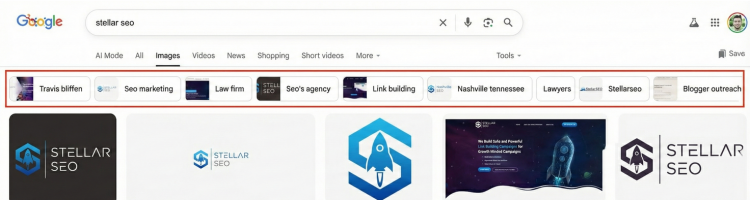
Using Google Images to Find Contextual Entities
Next, move to Google Images. The bubble tags at the top represent the visual themes tied to your topic. These tags often reveal subtopics and contextual entities that text-based tools miss. Capture every tag. They help you understand what Google expects to see when the topic is covered in depth.
Using Wikipedia to Anchor the Topic
Open Wikipedia’s page for your topic. At the bottom, record the categories. These are your parent entities. At the top, record every internal link in the first paragraph. These are child entities that define the scope. Combined, they form the structural outline of the subject.
By the end of this section, you will have a multi-angle list of entities drawn directly from Google’s own signals. This forms the base of your map.
Turning Your Entity List Into a Structured Map
The raw list is just data. Your next step is to organize it into a map that reveals where your content is strong and where it is missing critical connections.
Assigning Entities to Vectors
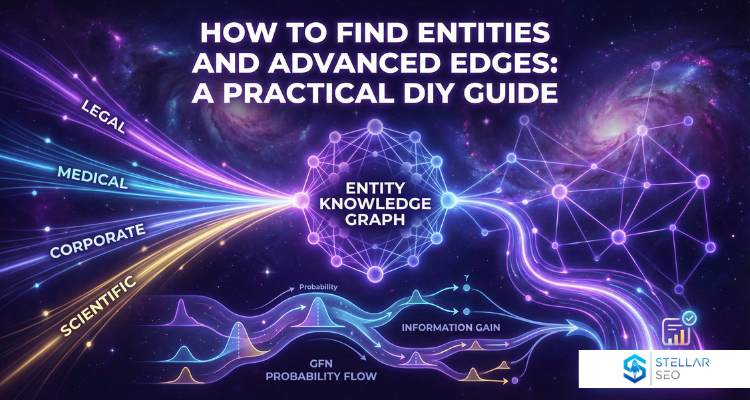
Create a simple spreadsheet. Instead of one long list, create columns for the distinct Vectors (themes) that define your industry.
For a complex topic like “Chemical Exposure Lawsuits,” your columns would look like this:
-
Column A (Legal): Class Action, Settlement, Liability, Negligence.
-
Column B (Medical): Lymphoma, Leukemia, Carcinogen, Toxicology.
-
Column C (Corporate): [Company Name], Stock Drop, CEO Statement, Recall History.
-
Column D (Regulatory): EPA, FDA, Water Safety Standards, Compliance Report.
Sort every entity you found in Part 1 into these columns. Suddenly, the gaps become visible. You might realize you have 50 keywords in the Legal column but zero entities in the Regulatory column. That is precisely why you aren’t ranking.
Identifying Basic Edges (Internal Structure)
A Basic Edge is a connection between two entities in the same column.
-
Example: Connecting “Benzene” (Medical) to “Leukemia” (Medical).
-
Why it matters: These are the table stakes. You use these edges to outline the paragraphs of your articles. If you don’t connect these dots, your content is thin.
Identifying Advanced Edges (The Authority Builder)
An Advanced Edge is a connection that jumps across columns. These are the relationships that build a Semantic Moat.
-
Example: Connecting a specific EPA Violation (Regulatory Column) to a Stock Price Drop (Corporate Column).
-
Example: Connecting a Chemical Half-Life (Scientific Column) to the Statute of Limitations (Legal Column).
The Action Step: Draw lines between these cross-column entities. These intersections are your content topics. Instead of writing another generic “Lawsuit Update,” you write an article about “How EPA Violations Impacted the [Company Name] Stock Drop.” This targets the exact semantic intersection Google is looking for.
Turning an Advanced Edge Into Editorial Content
Once you identify an Advanced Edge, you must convert it into a piece of content that reinforces the connection.
Establishing the Relationship
If the connection involves a device failure, identify the mechanism and explain its downstream impact (e.g., how a specific chemical breakdown in a medical implant can trigger the autoimmune response cited in the lawsuit). This simple narrative becomes the core of your article.
This step is essential because it tells the model exactly how the vectors belong together.
Supporting the Edge With Secondary Entities
Return to your entity list and select a small group of supporting terms that deepen the relationship. Place these within the body of your draft. They should appear naturally within explanations, examples, or analysis.
This creates the context Google expects to see when two vectors intersect.
Aligning With the Host Publisher
Before submitting the piece, review the publisher’s existing content. Identify which of your entities appear consistently on their site. Adjust your framing so your contribution fits cleanly within their established topics. This alignment improves the placement’s relevance and strengthens the signals generated by the link.
Using Your Entity Map to Find Aligned Publishers
Your entity map is now more than a list. It is a targeting tool for link prospecting.
Building Intersection Queries
Combine one entity from your primary vector with one from your secondary vector to create search queries. This reveals publishers who already participate in that semantic intersection. These sites will be far more relevant than generic “write for us” opportunities.
Evaluating Publishers
Open each site and look for recurring use of the same entities you mapped. When a domain consistently references two or more of your entities, it is a strong candidate. Add it to your list.
Prioritizing Targets
Rate each potential site based on how closely it matches your highest-value vectors. The closer the alignment, the stronger the outcome. Check their navigation bar or ‘About’ page. If they have dedicated categories for your secondary vector (e.g., a Law firm site with a specific ‘Medical Resources’ menu), they are a perfect match.
Where This Fits Into A Managed Link Building Program
This workflow strengthens your entity alignment, while your standard link building mix, such as guest posts, niche edits, and competitor link replication, continues to build the foundational authority and trust signals every competitive website requires.
This protocol provides the building blocks to strengthen topical coverage and improve semantic alignment.
The challenge is scale. Mapping one topic is straightforward, but competitive sites contain hundreds of pages and dozens of intersecting vectors. Each requires its own research, entity analysis, Advanced Edge selection, editorial development, and publisher matching. The deeper the topic, the more time this process demands.
Turning it into a complete, multi-vector program requires the coordination and scale that only a structured system can handle. That is why Stellar SEO created the Entity-Driven Link Building System (EDLS).
Related Resources