








How Trade Authority Drives Rankings, AI Visibility, and Leads
Executive Summary
Contractors no longer compete only for blue-link rankings. Search results increasingly surface shortlists and summaries that filter providers before a user ever clicks through.
Contractors who consistently surface share one thing in common: their trade is clear, their licensing is easy to verify, and third-party industry bodies already vouch for their legitimacy.
Stellar SEO builds contractor authority by reinforcing trust and entity signals. We offer link building services directly to contractors and provide white-label link building services to multiple SEO agencies specializing in contractor SEO.
Why Link Building for Contractors Is Different
Contractor websites are evaluated through additional verification layers that do not apply to most other industries. Those layers exist because contractors perform regulated, physical work tied to safety, property, and liability. Search visibility correlates with how clearly those layers are documented across the web.
For contractors, authority is reinforced through sources that confirm legal operation and trade legitimacy. Licensing boards, permit records, inspection programs, manufacturer certification directories, and local government resources all act as external validators. When these signals appear consistently, classification confidence increases, and rankings stabilize.
Most other niches are evaluated primarily based on content relevance, engagement, and editorial citations. Contractors are evaluated through those signals, plus regulatory confirmation and local compliance evidence. That additional requirement changes which links influence visibility and which links fail to move rankings.
Contractors Operate in a Trust, Licensing, and Safety Environment
Licensing status, permit history, inspections, and certifications function as credibility markers because they verify eligibility to perform work. Links connected to these systems reinforce authority in ways general editorial placements do not.
Contractor visibility depends on whether those validation signals are present, current, and geographically aligned. When trade verification is incomplete or inconsistent, link equity fails to compound even as content and outreach increase.
What “Real” Link Building Efforts Look Like in Licensed Trades
Effective link building for contractors follows the same pattern as offline credibility. Authority accumulates through third-party verification tied to real activity. Volume alone does not move rankings when those links lack a connection to licensing, trade context, or local presence.
In practice, three tactics consistently produce results for licensed trades.
Contextual niche edits work when placed on pages that already reference construction, permitting, home services, or regulated work. The surrounding content matters more than the anchor text. When a contractor is inserted into an existing resource, association page, or trade-related article, the link reinforces classification instead of introducing noise.
Editorial guest posts perform when the subject matter aligns with how contractors operate in the real world. Trade education, safety standards, energy efficiency, restoration guidance, and compliance topics earn placement on sites that already reference contractors as service providers. These links contribute authority because they mirror how contractors are discussed outside of marketing contexts.
Custom link building fills the gaps neither edits nor guest posts can reach. This includes outreach tied to certifications, manufacturer approvals, sponsorships, training programs, local partnerships, and community involvement. These links tend to originate from municipal sites, trade organizations, suppliers, and regional publications, which strengthens both authority and geographic relevance.
What ties all three approaches together is verification, not volume. The links that move contractor rankings are attached to real milestones, real affiliations, and real-world participation. When link acquisition reflects that reality, authority increases predictably.
Contractor SEO in the Age of AI and GEO
AI-driven search results surface shortlists, summaries, and recommended providers. Those systems do not evaluate contractors by keywords or page structure. They assess whether a contractor can be confidently classified as qualified to perform a specific trade in a particular location.
That classification depends on external validation.
Trade associations, manufacturer directories, and municipal sources function as verification layers. They confirm that a contractor operates within a defined trade, meets baseline standards, and participates in recognized industry systems. These sources already maintain their own vetting processes, which is why their links carry more weight than general editorial mentions.
When a contractor appears consistently across these sources, their expertise is reinforced through repetition and alignment. The same trade signals show up on licensing pages, association directories, supplier sites, and local resources. That consistency reduces ambiguity and increases confidence in classification.
Why Links Act as AI Citations
High-trust links behave like citations because they anchor claims to authoritative systems. A link from a trade association, manufacturer partner page, or municipal resource does more than pass equity. It confirms role, scope of work, and legitimacy.
Contractors with scattered or generic links lack that confirmation trail. Their authority signals do not align across trusted sources, which limits inclusion in summaries and shortlists even when rankings or content appear competitive.
AI systems favor contractors whose links document expertise through recognized industry structures. When link building reinforces those structures, visibility follows naturally.
How Google and AI Systems Understand Contractors
Contractors are grouped under a shared parent classification tied to construction, home services, and regulated trades. This parent entity establishes the baseline expectations around licensing, safety, and physical work performed on real property. Sites that fit cleanly into this category are evaluated through additional verification layers before rankings or recommendations are determined.
Child Trade Relationships
Within that structure, individual trades are treated as child classifications. HVAC, plumbing, roofing, solar installation, and siding each carry their own trade-specific signals, standards, and associations. Search systems look for consistency between the contractor’s stated services and the external sources that reference them. When those signals align, classification confidence increases.
Why Entity Reinforcement Matters More Than Link Volume
Entity reinforcement matters because it reduces ambiguity. A contractor that appears across trade associations, manufacturer directories, municipal resources, and local citations under the same trade designation becomes easier to categorize. Overlapping signals across related trades, such as roofing and siding or HVAC and plumbing, further strengthen that classification when they reflect real-world service overlap.
Link volume alone does not resolve uncertainty. A smaller number of links that consistently reinforce the same trade relationships tends to outperform larger profiles built without alignment. Systems reward clarity because it lowers the risk of recommending the wrong provider for regulated work.
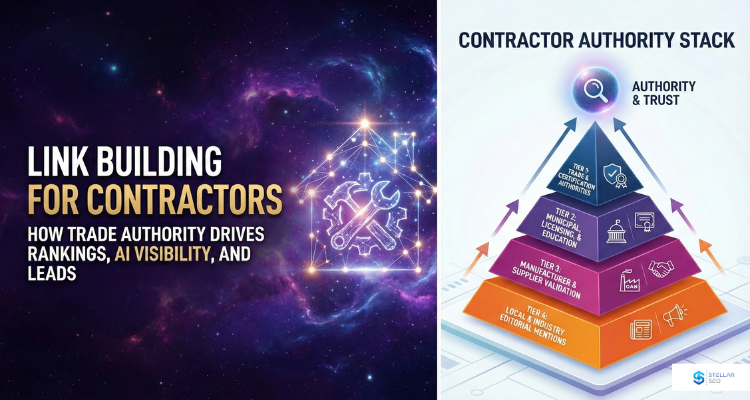
The Contractor Authority Stack: Where High Quality Backlinks Actually Come From
Contractor authority builds in layers. Each layer reinforces a different part of trade legitimacy, and each one plays a role in how search systems classify, trust, and surface contractors. Strong profiles tend to show coverage across all four tiers, with heavier emphasis on the upper layers.
Tier 1: Trade and Certification Authorities
Trade and certification authorities establish whether a contractor belongs in a specific discipline. These organizations define standards, maintain membership requirements, and serve as reference points for how a trade operates.
Links from these sources reinforce trade classification and the scope of work. They confirm that a contractor participates in recognized industry systems rather than operating in isolation.
- National and regional trade associations
- Industry standards bodies and certification programs
Tier 2: Municipal, Licensing, and Education Sources
Municipal and educational sources anchor legitimacy for licensed trades. These links confirm legal operation, regulatory compliance, and geographic alignment. For contractors, this tier often has more influence than traditional editorial links.
These sources tend to exist outside of SEO ecosystems and are updated through real administrative processes, which increases their credibility.
- City and county permitting offices (.gov)
- State licensing and regulatory boards
- Utility rebate and energy-efficiency programs
- Community colleges and accredited trade schools (.edu)
Tier 3: Manufacturer and Supplier Validation
Manufacturer and supplier links confirm technical competence. Authorized installer directories, dealer listings, and training records indicate familiarity with specific products, systems, and installation standards.
These links also reinforce trade specialization. HVAC, roofing, solar, and siding contractors benefit when manufacturers publicly associate them with approved installation or service programs.
- Authorized installer and dealer directories
- Manufacturer partner and reseller listings
- Training, certification, and continuing education pages
Tier 4: Local and Industry Editorial Mentions
Editorial and community citations support local presence and regional relevance. These links often reflect real participation in the surrounding market through projects, sponsorships, or coverage tied to actual work performed.
While these links carry less weight individually, they help confirm service areas and community involvement when aligned with the upper tiers.
- Local news and regional publications
- HOA, neighborhood, and community resources
- Property management and real estate publications
Foundational Contractor Platforms That Still Matter
Some contractor platforms continue to carry weight because they sit upstream of search behavior. These sites are not used only for discovery. They are used for verification. Search systems reference them because consumers, regulators, and other businesses already do.
These platforms also maintain structured contractor categories, service areas, and review histories, which reduces ambiguity around trade classification and business legitimacy.
Cross-Trade Contractor Directories
- Angi
Angi maintains long-standing contractor profiles tied to specific trades and locations. Listings tend to persist over time and accumulate historical signals related to reviews, services offered, and business continuity. - HomeAdvisor
HomeAdvisor profiles reinforce trade categorization and service scope. These listings are frequently referenced across the web, which helps standardize how a contractor is described and classified. - Better Business Bureau
The BBB functions as a legitimacy checkpoint. Accreditation status, complaint history, and business longevity provide third-party confirmation that extends beyond marketing claims.
Why These Platforms Still Work
These directories persist because they solve classification and trust problems at scale. They establish consistent naming, category alignment, and geographic relevance. When a contractor appears across these platforms with matching trade signals, it strengthens confidence in business legitimacy.
While these links alone do not carry a campaign, they provide a stable foundation. Higher-trust association, municipal, and manufacturer links tend to compound more effectively when this baseline is already in place.
Trade-Specific Link Building Strategies by Contractor Type
Contractor authority does not scale evenly across trades. Each discipline carries its own standards, associations, manufacturers, and validation sources. The sections below break down how link building works at the trade level, which signals that actually moves rankings, and where authority comes from for each contractor type. This is not a list of directories. It is a breakdown of how search systems verify expertise within regulated trades.
HVAC Authority: Beyond the Basics
HVAC authority is built around mechanical systems. Search systems consistently associate HVAC contractors with heating, cooling, ventilation, airflow, load calculations, and energy performance. Because the work affects safety, indoor air quality, and energy consumption, HVAC sites are evaluated against stricter validation signals than many other home services.
Authority in this trade accumulates when external sources confirm technical competence, compliance, and specialization. Links that reference HVAC contractors in the context of mechanical systems reinforce that classification and tend to compound over time.
Authority Focus
HVAC link building performs best when it reinforces three areas that define the trade:
- Mechanical system expertise tied to installation, maintenance, and repair
- Energy efficiency standards and performance programs
- Safety, inspections, and compliance requirements
These themes appear repeatedly across trusted HVAC-related sources and form the backbone of trade recognition.
Why HVAC Is Treated as a Mechanical Trade
HVAC contractors are grouped with mechanical system providers rather than general home services. That grouping increases the importance of industry validation. Search systems look for confirmation that a contractor operates within recognized mechanical standards and participates in established trade ecosystems.
Links that originate from mechanical, energy, or compliance-focused organizations reinforce that expectation. Generic editorial placements without trade context rarely move HVAC rankings on their own.
Key Entities and Validation Sources
- ACCA
- ENERGY STAR
- PHCC
These organizations define best practices, training standards, and certification frameworks. Mentions and listings tied to them strengthen HVAC classification and signal adherence to industry norms.
Authority Signals We Emphasize
Effective HVAC link profiles tend to show a consistent pattern of verification:
- Validation: Listings and references tied to ENERGY STAR partnership or similar efficiency programs
- Proximity: Mentions from local neighborhood associations, municipal resources, and community organizations that confirm service area relevance
- Co-occurrence: References that place the contractor alongside established manufacturers such as Carrier or Trane, reinforcing technical alignment
When these signals appear together across multiple sources, HVAC authority stabilizes, and rankings become less volatile.
Link Building for Plumbers
Plumbing authority is tied to infrastructure, safety, and compliance. Plumbing work connects directly to the water supply, waste systems, and public health, placing it under tighter regulatory oversight than many other home services. Search systems reflect that reality by weighting links that confirm licensing, inspection history, and code alignment.
Effective plumbing link building reinforces legitimacy through sources that already govern or reference plumbing work in the real world. Links disconnected from that context tend to stall early.
Authority Focus
Plumbing companies build authority when links consistently reinforce three core areas:
- Licensing status and inspection history are tied to local and state requirements
- Emergency service credibility, including availability and response capability
- Municipal infrastructure involvement, such as sewer, water, and compliance-related work
These themes appear repeatedly across trusted plumbing-related sources and shape how plumbers are classified.
Key Entities and Directories
- PHCC
- IAPMO
PHCC reinforces trade membership and professional standards. IAPMO anchors code compliance and inspection alignment. References tied to these organizations strengthen plumbing classification and confirm adherence to recognized systems.
Cross-Trade Overlap
Plumbing authority often overlaps with adjacent trades that share infrastructure and compliance touchpoints. HVAC contractors, general contractors, and property management firms frequently reference the same regulatory and operational sources. When those overlaps reflect genuine service relationships, they reinforce credibility rather than dilute it.
Strong plumbing profiles show consistent validation across licensing bodies, code authorities, and local infrastructure-related sources. When those signals align, authority stabilizes, and rankings follow.
Link Building for Roofing Contractors
Roofing authority is tied to risk, materials, and response capability. Roofing work is closely associated with storm damage, insurance claims, and large-scale property restoration, which makes credibility and manufacturer alignment central to how roofing contractors are evaluated.
Effective roofing link building reinforces proof of competence in high-liability scenarios. Links connected to restoration work, certification programs, and insurance-adjacent activity tend to carry more influence than general contractor mentions.
Authority Focus
Roofing companies gain trust and link equity when links consistently reinforce three areas:
- Storm response and restoration work tied to wind, hail, and weather events
- Insurance-driven projects involving claims, inspections, and remediation
- Manufacturer certification and material-specific installation standards
These signals align with how roofing contractors are referenced across trusted sources during real projects.
Key Entities and Directories
- NRCA
- GAF
NRCA reinforces professional standards and trade participation. GAF and similar manufacturers validate product-level expertise through certification and authorized installer programs. Links tied to these entities strengthen roofing classification and signal adherence to accepted installation practices.
Cross-Trade Overlap
Roofing authority often overlaps with trades involved in exterior restoration and claims-driven work. Siding installers and solar installers intersect at the structural and material level. Insurance adjusters appear frequently in restoration contexts tied to inspections and loss assessment.
When these overlaps reflect actual project relationships, they reinforce credibility and the scope of work. Strong roofing profiles demonstrate alignment across manufacturers, trade bodies, and insurance-adjacent sources, stabilizing authority in competitive markets.
Link Building for Solar Installers
Solar authority is built around policy compliance, incentive qualification, and electrical safety. Solar installation sits at the intersection of construction, utilities, and energy regulation, which introduces verification layers that extend beyond standard home services.
Effective solar link building reinforces eligibility. Search systems look for confirmation that an installer operates within approved incentive programs, meets electrical standards, and participates in recognized energy and sustainability ecosystems.
Authority Focus
Entity validation and topical authority for Solar companies increase when links consistently reinforce three areas:
- Alignment with energy policy and renewable standards
- Participation in utility incentive and rebate programs
- Electrical safety compliance is tied to installation and inspection requirements
These signals reflect how solar installers are referenced across utilities, regulators, and industry organizations.
Key Entities and Directories
- SEIA
- DSIRE
SEIA reinforces trade participation, policy engagement, and industry standards. DSIRE anchors incentive eligibility and utility alignment. Links tied to these entities confirm that a solar installer operates within recognized regulatory and incentive frameworks.
Cross-Trade Overlap
Solar authority frequently overlaps with roofing and electrical trades. Roofing contractors intersect through mounting systems and structural integration. Electrical contractors intersect through wiring, inverters, and inspection requirements. Green building organizations appear where solar is part of broader efficiency or sustainability initiatives.
When these overlaps reflect real project relationships, they strengthen classification and scope. Strong solar profiles show consistent references across energy policy sources, utility programs, and electrical compliance bodies, which stabilizes authority and visibility.
Link Building for Siding Installers
Siding authority is tied to exterior construction standards, material performance, and installation accuracy. Siding work affects weather resistance, energy efficiency, and structural protection, underscoring the need for manufacturer alignment and verified installation practices.
Effective siding link building reinforces proof of competence at the material and system level. Search systems look for confirmation that an installer works with approved products, follows documented installation standards, and participates in recognized construction ecosystems.
Authority Focus
Siding companies rank better when links consistently reinforce three areas:
- Exterior construction expertise tied to building envelopes and structural protection
- Weather resistance and durability standards related to wind, moisture, and temperature exposure
- Manufacturer installation requirements and material-specific certifications
These signals align with how siding installers are referenced across manufacturers, builders, and restoration projects.
Key Entities and Directories
- James Hardie
- NAHB
James Hardie validates material-specific installation standards through contractor programs and certified installer references. NAHB reinforces broader credibility and integration within the construction industry and with residential building practices. Links tied to these entities confirm technical alignment and trade participation.
Cross-Trade Overlap
Siding authority overlaps closely with roofing and storm restoration work. Roofing contractors intersect at the exterior envelope level. Storm restoration contractors appear after siding replacement, following weather damage or insurance-driven repairs. General contractors connect siding installers to larger construction and renovation projects.
When these overlaps reflect genuine project relationships, they strengthen scope and credibility. Strong siding profiles demonstrate consistent alignment among manufacturers, construction associations, and exterior trade partners, stabilizing authority in competitive local markets.
Across HVAC, plumbing, roofing, solar, and siding, the same pattern holds. Authority increases when links align with real business activity and verified participation in the trade ecosystem. The timing of those links matters as much as their source.
How Contractor Link Velocity Should Actually Look
Contractor link growth follows business events, not publishing schedules. When authority builds in step with real-world milestones, link patterns remain stable and defensible.
Growth Should Mirror Real-World Events
Link acquisition typically coincides with moments that trigger third-party validation:
- New licenses and certifications
- Manufacturer approvals and program acceptance
- Community sponsorships and local involvement
- Partnerships with suppliers, builders, or property managers
These events create legitimate reasons for links to appear when growth reflects those moments, authority compounds without volatility.
Common Contractor Link Building Mistakes
Most contractor link failures trace back to misalignment, not effort. Links get built, but they fail to reinforce trade identity, regulatory context, or local credibility.
When Outsourcing Link Building Goes Wrong
Outsourced campaigns break down when vendors treat contractors like generic service businesses. Trade nuance gets ignored, outreach targets drift into unrelated industries, and links accumulate without reinforcing classification.
When links fail to align with licensing bodies, manufacturers, or local validation sources, authority stalls, volume increases, and rankings don’t.
Measurement and Proof: Using Google Analytics to Track Lead Quality From Links
Contractor link building should be measured by outcomes tied to revenue, not surface-level metrics. Traffic alone does not indicate authority.
Effective measurement focuses on how links influence calls, form submissions, and service-area page performance. Separating branded demand from referral-driven activity helps identify which links reinforce trust versus those that accompany awareness.
Editorial and Asset-Driven Links: High Quality Content That Earns Citations
Contractor content earns links when it documents real processes. Trade-specific guides, permitting explanations, and safety or compliance resources attract citations because they answer questions other sites already reference.
These assets work best when they map directly to regulated activity. Content disconnected from inspections, standards, or real-world execution tends to attract attention without authority.
Community Trust Signals: Social Media Mentions, Sponsorships, and Local Brand Searches
Community-based signals reinforce legitimacy at the local level. Event sponsorships, neighborhood partnerships, and local mentions confirm that a contractor operates within a real service area and participates in its market.
These signals rarely drive authority alone, but they stabilize profiles when paired with municipal, association, and manufacturer links.
Integrating Links Into Your SEO Strategy
Links compound when they support service pages tied to real demand. Disconnected campaigns create an isolated authority that fails to translate into leads.
Effective integration aligns link acquisition with service offerings, geography, and trade scope. Over time, this produces consistent classification and predictable visibility rather than temporary lifts.
How Link Building Supports Local SEO for Contractors
Local visibility depends on reinforcement, not repetition. Local links that reference service areas, municipal involvement, and regional partnerships strengthen proximity signals and trust alignment.
When a local authority is supported by licensing, permitting, and trade validation, visibility improves across both map results and organic listings.
Final Takeaway
Contractor link building works when backlinks reflect how licensed trades are validated in the real world. When authority mirrors reality, rankings stabilize, AI recommendations become consistent, and lead flow follows a predictable pattern instead of spiking and collapsing. If you don’t have the time or desire to build these links in-house, we can help. Get in touch today.