






Link Building for Startups Who Need Rapid Growth
Executive Summary
Startups begin with strong products but zero search authority, which drives CAC higher because organic channels cannot contribute early. This guide explains how entity-focused link building shortens the time it takes for Google to trust a new brand, improves visibility during go-to-market, and creates a more efficient acquisition mix.
• Helps reduce CAC by improving early organic discovery
• Speeds up trust and classification inside the Knowledge Graph
• Aligns link building with go-to-market timelines
• Includes a tactical DIY section for teams handling initial execution
A short DIY appendix is included for teams that want practical, in-house tactics.
Go-To-Market Authority for Funded Startups
A funded startup can build a strong product, assemble a capable team, and carve out a clear market position. None of that guarantees visibility. Google still treats a new domain like an unknown. The company has no history, no context, and no recognized place inside the Knowledge Graph. Meanwhile, incumbents with a decade of authority get first access to buyer intent.
The gap between business progress and search recognition hits startups at the worst possible moment. Investor expectations keep rising while CAC does the same. Paid channels take over by default because organic is too weak to carry its share of the acquisition load.
How EDLS Helps New Companies Earn Trust Faster Than Traditional SEO
Generalist SEO cannot close this gap. It was built for businesses over time. Funded teams do not have that luxury. They need authority engineered from the start. Our Entity-Driven Link Building System (EDLS) was created for that environment.
The Authority Gap Startups Encounter on Day One
A new domain enters the market without any recognized identity. Search systems cannot tell which category the company belongs in, which competitors sit beside it, or which queries should drive traffic.
With no place in the Knowledge Graph, the brand sits outside the clusters that shape discovery. That friction slows visibility, inflates CAC, and forces teams to rely on paid channels longer than planned. Organic becomes a cost center rather than a pipeline driver, and the growth model strains.
The Authority Gap is not a keyword problem. It comes from missing meaning. Until the company is mapped correctly, rankings and revenue stay bottlenecked.
Why a Clean Slate Gives Startups a Real Advantage
Mature companies drag years of mixed signals behind them. Weak links, irrelevant pages, thin content, scattered anchors, and legacy clutter make it harder to build clean authority.
Startups avoid all of that. They present a blank surface where every signal counts. EDLS performs best in this environment because nothing competes with the new framework. The brand takes shape faster. Reinforcement lands harder. Authority compounds cleanly. Those early months set the tone for the entire go-to-market strategy.
When meaning is established early, the startup gains leverage that most incumbents never had.
Why Generalist SEO Agencies Struggle With Funded Startups
Many agencies focus on volume-based link packages, vanity PR hits, or keyword-driven content pipelines. These tactics do not help a startup close a multi-year authority gap. They push links and content without shaping how the brand is interpreted.
When signals do not map to the company’s identity, organic stalls. CAC rises. Payback periods stretch. Teams end up spending heavily on paid channels to compensate for an organic program that never had the structure to scale.
A funded startup needs a system that aligns meaning, authority velocity, and acquisition strategy. EDLS provides that structure.
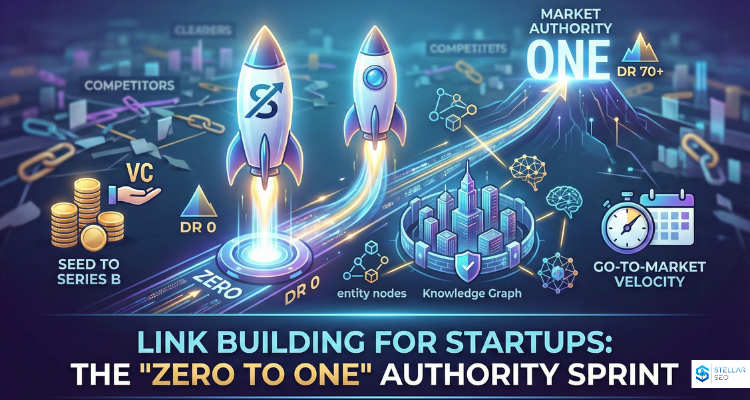
The Zero to One Entity Sprint
The Zero to One Sprint focuses on creating clarity, building context, and accelerating authority with precision. Startups benefit the most from structured sequencing, not scattered tactics.
Calibrating the Entity
Everything begins with anchoring the brand inside the Knowledge Graph. That includes category placement, competitor adjacency, problem alignment, and consistent reinforcement that tells search systems what the company represents. This step shapes how every future signal is interpreted.
Building the Semantic Neighborhood
After calibration, the company needs to sit inside a recognizable context. That means positioning the brand among the tools, integrations, workflows, and conversations buyers already trust. Once that neighborhood forms, organic intent starts flowing toward the company. CAC begins to fall because the brand is finally discoverable in the paths customers already travel.
Authority Velocity Guided by Context
Funded teams often need to scale link acquisition faster than legacy SEO recommends. Velocity, when aligned with entity signals, becomes safe. EDLS uses context to determine where links should originate and how they should reinforce the brand’s identity. This removes guesswork and prevents waste.
Compressing a Decade of Authority Into a Short Window
Startups cannot replicate a competitor’s ten-year backlink history. They do not need to. When entity clarity and semantic alignment mature, the impact of each signal increases. Rankings accelerate. Visibility compounds. The company starts taking positions incumbents assumed they owned.
How EDLS Repositions a Startup Inside the Knowledge Graph
EDLS strengthens three layers of entity development. Together, they shift how search systems interpret the brand.
Clarity defines the brand’s identity.
Reinforcement shows consistency across trusted sources.
Expansion opens the door to broader queries and deeper topics.
Modern retrieval systems respond to this structure because they prioritize meaning. When a brand presents stable signals, search systems can confidently route commercial intent toward it. As this alignment strengthens, CAC declines, and organic becomes a predictable growth channel rather than a future hope.
When a startup gains a stable semantic footprint, it gains leverage. Traffic becomes cheaper to acquire, revenue compounds faster, and valuation metrics improve.
Why MUVERA Matters Without Requiring a Technical Background
Google’s newer systems, including MUVERA, evaluate content and brands based on context rather than keyword matching. They map meaning across vector spaces and reward entities that demonstrate clear relationships to the topics buyers care about.
The takeaway is simple. If Google cannot understand what your company represents, it will not connect you to the searches that create revenue. When that happens, paid channels carry the entire acquisition load and CAC rises quickly.
A strong entity foundation keeps acquisition costs under control and helps the startup transition from a paid-heavy model to a channel-balanced model.
Founder Authority as an Early Signal
In the early stages, the founder often serves as the company’s strongest recognition signal. Their insights, interviews, and commentary help search systems understand expertise and intent. When these signals tie back to the brand, both entities gain strength.
This work is less about publicity and more about helping the company earn trust before the domain has enough history to support itself.
Why Most SEO Approaches Collapse During Go-To-Market
Generalist SEO operates in silos. Agencies push links without context. They write content that does not reinforce the brand’s identity. They chase keywords without understanding the underlying entity structure.
That disconnect forces founders to keep spending on paid channels. CAC rises. Runway shortens. Teams get stuck in a loop where organic never catches up.
EDLS solves this by treating authority as an engineered system with defined phases and measurable impact.
What Startups Can Expect From a Structured Authority System
Once the early entity work is set, the growth pattern becomes much easier to forecast. Visibility rises within the first stretch of the campaign as the brand gains its footing within the Knowledge Graph.
Rankings follow once the semantic neighborhood stabilizes and Google can confidently route commercial intent toward the domain. Over time, authority compounds, and the brand starts appearing in AI-driven results because its identity is now recognized across the ecosystem.
This progression aligns far better with investor timelines and the traction milestones that matter during Seed, Series A, and Series B growth cycles.
Moving From Zero to One, Then One to Leader
The sprint gives the startup a defined position. The next stage makes that position hard to displace. Once the brand is recognized, money pages start absorbing more demand, broader queries open up, and the company begins replacing incumbents in the spaces that actually drive revenue. Organic shifts from a future goal to a dependable acquisition channel.
Who This Program Fits
Startups considering this approach, such as those seeking SaaS link building, usually share a few characteristics. They have raised Seed, Series A, or Series B funding, and they operate in environments where authority directly influences acquisition costs. They also value systems over tactics and need an organic strategy that aligns with their go-to-market expectations.
• Established funding (Seed through Series B)
• Competitive or regulated markets
• Aggressive growth timelines
• Revenue-focused SEO goals
Teams looking for light pilots or slow-moving campaigns should consider our standard packages. The sprint was designed for companies operating with urgency.
What Makes Stellar SEO the Right Partner at This Stage
We build authority by shaping meaning, not by stacking links. EDLS gives search systems a clear understanding of who the company is, why it should matter, and how it fits into the market. When startups invest in clarity and context early, they gain acquisition leverage that compounds month after month.
Stellar SEO specializes in building custom link building campaigns that help ambitious companies safely achieve rapid growth. Get In touch today to see how our framework can boost your startup.
Practical Link Building Tactics for Startups (DIY Appendix)
Some funded teams want a clear playbook they can run internally before engaging an agency. This appendix is written for that use case. It assumes you understand the basics of SEO and focuses on how to use your unique assets, including investors, internal data, and your ability to move quickly. The goal is to help you build early authority through effective link building tactics that support long term growth without wasting resources.
The Strategy: Relationship Building, Not Outreach
Most link building methods treat every website the same. Startups cannot afford that mentality. A funded company has a short runway, a fresh story, and partners with reach. Early link building should feel closer to business development than mass outreach.
A practical process looks like this.
- Identify the people and brands already in your orbit, including investors, software vendors, customers, and partners.
- Decide which specific pages on your own site deserve attention. These are the pages that influence revenue and need more dofollow links.
- Use your data and insights to create linkable resources that give those relationships a reason to link back to you.
This approach produces high quality links that move authority and relevance, rather than multiple links from random sites that do not influence your target audience.
The Unfair Advantage: Investor and Partner Portfolios
A startup does not need hundreds of links in the first few months. It needs the right links from relevant sites. Investor portfolios and product integration partners are the easiest way to earn high authority links early because they already want you to succeed.
The investor’s play is simple. Most VC firms publish interviews, updates, and portfolio features. Ask to be included. These websites often have strong domain authority, and the link placement looks natural because the relationship already exists.
Your tech stack is another source of valuable links. If you use platforms like Stripe, AWS, or HubSpot, offer to collaborate on a case study or contribute to their blog. They get a story, and you get links from high authority sites that Google already trusts. These sources create valuable backlinks that support both visibility and credibility.
Guest Posting Through the Founder Lens
Guest posting still works when it is founder-led. Anonymous blog posts rarely move buyers. A founder speaking from real experience does.
A strong founder-led article should explain how a problem in your market works, share counter patterns from your customer base, or highlight shifts in the category that others have not noticed yet. These insights create relevant content that industry sites are willing to publish. Writing guest posts for a small set of respected publications is more effective than producing large volumes of promotional content for other sites.
Choose publications that your buyers read and focus on natural link placement that supports one or two key landing pages on your own site. This gives you effective link building without diluting your voice.
Turn Internal Data Into Linkable Assets
Startups often sit on data that legacy competitors cannot access. That data can fuel linkable assets that earn links from relevant websites without aggressive outreach.
Examples include:
- Industry benchmarks created from anonymized usage patterns
- A State of the Market report backed by your internal data
- Comparison frameworks that help buyers evaluate their options
Journalists, bloggers, and industry analysts rely on data. When your company becomes the source they cite, multiple links show up automatically. These assets strengthen the site’s authority and often improve organic traffic for the target keywords you care about.
Niche Relevance Over Volume
Niche-relevant backlinks carry more weight than general links because search engines evaluate topical alignment. Your ecosystem contains many unused opportunities for building links.
If your product integrates with another tool, make sure you are listed in their integration directory. If you sponsor events, request a link to a relevant landing page in the sponsor profile. If you publish customer success stories, invite customers to publish a companion piece on their own site that links back to you.
These opportunities support effective link building by aligning with your target audience and demonstrating credibility in your niche.
Managing Link Velocity and Risk
A funded startup often gains multiple links quickly through launch buzz, media attention, and co-marketing. This higher link velocity is natural and rarely a risk. Problems arise when links come from low quality content or random websites that have no connection to your category.
A simple test helps avoid mistakes. Would you feel confident showing a potential investor a list of sites linking to your company?
If the answer is yes, the link is likely valuable. If not, it may be a low quality placement that weakens your link profile. The safest approach is to choose effective link building techniques that support authority rather than chasing as many links as possible.
Which Tactics Fit Each Startup Stage
Seed stage companies benefit most from founder-led guest posting, early PR moments, and one strong linkable asset. As the company reaches Series A, expansion into niche partnerships and ecosystem-driven links becomes more valuable. By Series B, the best link building strategy relies on assets, data-driven content, and consistent promotion that support growth targets and long-term authority.
The principles stay the same. Choose quality over volume. Focus on relevance. Support the pages that influence revenue.
DIY or Professional Support
DIY link building helps founders understand what a good link looks like and how relationships turn into ranking power. As the company scales, the requirements shift. Link building becomes a system, the content footprint grows, and the need for semantic authority increases.
DIY works during the early stages when traction matters more than scale. When you need predictable authority growth that aligns with revenue targets, it requires a structured system like EDLS that combines link signals, context, and entity development.
Startup Link Building FAQs
Why shouldn’t a startup buy cheap links to speed things up?
Cheap links create artificial patterns that search engines recognize quickly. They inflate link velocity without adding relevance, and they often come from low quality sites that damage trust signals. For a funded startup where CAC is already under scrutiny, cleaning up these links later costs more than doing it correctly from the beginning.
Do startups actually need a link building system, or can they just publish content?
Publishing content without building links works only if your domain already has authority. Startups begin with none. Without links from relevant sites, even the best content struggles to rank because search engines have no reason to trust it. A system ensures that authority grows at the same pace as your go-to-market plan.
Why not hire an intern or junior marketer to run outreach instead of a specialized team?
Outreach without strategic context produces random links. What a startup needs is alignment between links, category signals, investor expectations, and revenue goals. Junior outreach can generate replies, but it cannot engineer authority. The cost of misaligned links shows up later in slower rankings and higher CAC.
Can a startup rely on PR alone instead of link building?
PR helps visibility but does not build consistent authority unless those stories include links to the right pages. Most announcements point only to the homepage. Authority grows when PR efforts route trust to your key commercial pages. Without that structure, PR creates buzz but not rankings.
How many high quality links does a startup actually need to see movement?
Most startups do not need large quantities. A controlled flow of high authority links that support your core pages often produces faster growth than chasing dozens of low value placements. The deciding factor is relevance, not volume.
What is the best link building strategy for startups wanting predictable growth?
The strongest strategy pairs tactical execution with a structured system that builds category identity. Founders can create the first wave of links through interviews, investor features, and data backed content. Predictable long term growth comes from an entity focused framework like EDLS, which aligns every link with your market, competitors, and revenue targets.