








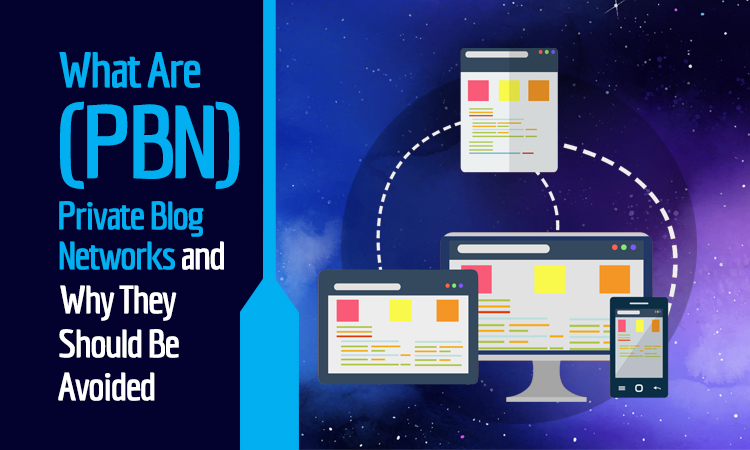
What Are PBN Links?
In the past, PBN links could move rankings quickly. Today, most of them do not.
Modern Google algorithms frequently ignore these links entirely. When that happens, nothing breaks and nothing improves. Rankings stay flat, visibility stalls, and money is lost quietly. That outcome is far more common than penalties.
PBN backlinks are still considered a black hat SEO tactic and remain a direct violation of Google’s search engine guidelines. When networks are detected, links are neutralized or removed from ranking calculations. In more severe cases, sites can still receive manual actions.
The real problem is not whether PBN links can work. It is whether they are worth the risk, cost, and short shelf life compared to strategies that build durable authority.
This guide explains what PBN links are, how they are built, why they continue to be sold, and why they fail in modern search and AI-driven discovery.
Owning Multiple Sites Does Not Automatically Mean a PBN
A private blog network is not defined by ownership alone.
Many legitimate businesses own multiple websites, brands, or subsidiaries. Cross-linking between those properties does not automatically violate Google’s guidelines when it reflects a real business relationship and is done naturally.
Examples of legitimate interlinking include:
- A parent company linking to its owned brands
- Sister companies referencing each other where contextually relevant
- Separate business sites sharing citations or brand mentions without keyword manipulation
A network becomes a PBN when its primary purpose is link manipulation, not when sites simply share ownership. Signals that push a network into PBN territory include artificial anchor text patterns, thin content created solely to host links, and sites that exist only to pass authority.
Clarifying this distinction matters. Ethical interlinking between real businesses is common and safe when executed properly.

How Are Private Blog Networks Typically Built?
Building your own PBN involves creating multiple websites with unique content and then using those sites to link back to a target domain via website networks.
Here are the basic steps involved in building a PBN network:
Expired domain selection:
The first step is to select expired domains for the PBN website networks. These expired domains should have a history of being indexed and good metrics such as domain authority, trust flow, and citation flow.
Content creation:
Once the domains are selected, unique content is created for each privately owned website. This content is typically relevant to the main site’s niche or industry.
Hosting:
The PBN websites are then hosted on different servers to make it appear that different people own them and to avoid footprints that could trigger search engine penalties.
Linking:
Finally, the PBN domain will build PBN links to the target website. The PBN backlinks should be placed in a natural-looking manner and should not appear spammy or forced.
Building vs. Buying PBN Links: Not the Same Risk
There is an important difference between building a private network and buying PBN links.
Publicly sold PBN links are almost always the worst option. These networks are shared, heavily reused, and already mapped by Google. When a network is openly selling links at scale, detection is only a matter of time. In many cases, the links are already ignored before a buyer ever sees results.
Building a private network carries a different risk profile. Privately built networks can sometimes produce short-term gains if managed carefully, but they require significant resources, constant maintenance, and a tolerance for long-term risk. Even then, results are rarely durable.
This distinction matters because many businesses unknowingly purchase links from burned networks and assume the tactic “doesn’t work,” when in reality the links never had any value to begin with.
What Are Some Major Issues & Flaws That Come With Private Blog Network (PBN) Link Building?
It’s worth noting that PBN backlinking strategies typically have several major flaws, which include:
Low-quality content:
PBNs often rely on low-quality, spun, or duplicate content that does not provide value to users. Search platforms favor high-quality, relevant, useful, and engaging content.
Footprints:
PBNs can leave footprints that search engines detect, such as similar IP addresses, themes, or templates, which can lead to penalties.
Time-consuming and expensive:
Building and maintaining a PBN network can be time-consuming and expensive, requiring ongoing investment in content creation, hosting, and management.
Do PBN Links Ever Work?
Yes, they can work temporarily.
Carefully constructed private networks can still move rankings in the short term, particularly in low-competition environments. This is why PBNs continue to exist.
The issue is not whether they can work. The issue is how long the benefit lasts, how much risk is attached, and whether the same resources could produce stronger, safer results elsewhere.
In competitive industries, short-lived gains often disappear as Google reprocesses link signals. Long-term authority is built through independent, earned validation, not controlled networks.
Acknowledging this reality builds trust. Pretending PBNs never work does not.
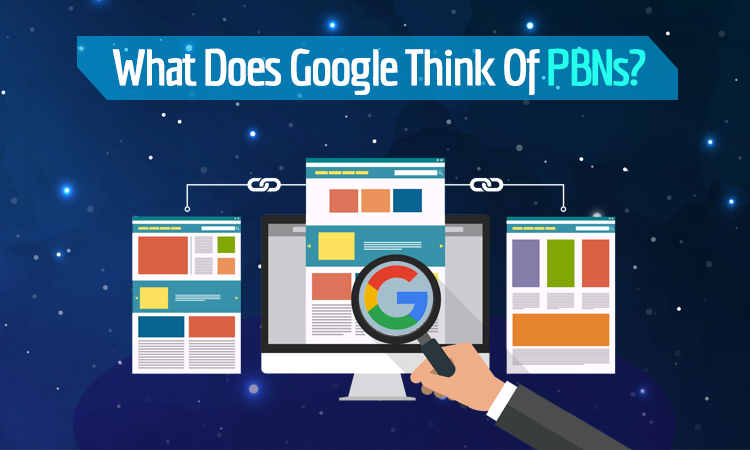
What Does Google Think Of PBN Links?
Google treats PBN links as a manipulation tactic, not a gray area.
When networks are detected, Google’s systems discount their influence rather than reward it. In most cases, the links stop contributing to rankings altogether. In more serious situations, particularly when patterns are aggressive or obvious, manual actions are still applied.
The key point is not whether Google disapproves of PBNs. That has been clear for years. The practical reality is that detected networks do not strengthen rankings, even when no visible penalty occurs.
This is why many sites using PBN links see stalled performance instead of sudden drops. The links are present, but their impact has been removed.
Understanding that distinction matters more than memorizing guidelines. The real risk is not punishment. It is building a strategy on links that no longer carry weight.
Ignored vs. Penalized PBN Links
Not all PBN links trigger penalties.
Since Google’s Penguin algorithm was integrated into the core ranking system, the most common outcome of low-quality or manipulative backlinks is neutralization, not punishment. In plain terms, Google often chooses to ignore these links entirely rather than penalize the site they point to.
This is why many sites using PBN links do not experience an immediate drop in rankings. The links simply stop contributing any ranking value.
For businesses, this creates a different but equally serious risk. Instead of losing rankings overnight, they lose budget, momentum, and opportunity. Money spent on PBN links often yields no lasting SEO benefit, even if no manual action is taken.
In modern SEO, wasted link spend is far more common than outright penalties.
From Private Blog Networks to AI Influence Networks
We are actively monitoring a shift in how private networks operate. As search moves toward AI and Retrieval-Augmented Generation (RAG), manipulators are moving away from “link equity” and toward “information consensus.”
We call these AI Influence Networks. Instead of passing link juice via dofollow links, they are designed to feed topical data to LLMs via “seed and feed” strategies on platforms like Reddit and LinkedIn. While traditional PBNs are easily spotted by tools like Ahrefs, these new networks rely on brand mentions and context, making them harder to detect but equally manipulative.
How Can You Spot PBN Backlinks?
Identifying PBN backlinks can be challenging, but there are a few indicators that can help.
Site quality: A PBN domain typically has low-quality, outdated, or irrelevant content created solely to link to other sites. If the website linking to your money site has poor-quality content or looks spammy, you may have gotten a PBN link.
Similarity: PBNs are often created using the same or similar templates, themes, or designs, resulting in noticeable similarity across multiple sites in a PBN. If you notice a pattern of similarity between multiple sites linking to your site, you may have PBN links.
Anchor text: PBN sites often use exact-match or keyword-rich anchor text when they generate PBN backlinks to manipulate search rankings. If you notice that a significant number of links to your site use the same or similar anchor texts, it may be a private blog network (PBN).
Hosting: PBNs often use the same hosting provider or IP address to generate PBN backlinks on different sites, which can be a red flag. If you notice that multiple sites linking to your money site share the same hosting provider or IP address, this could indicate PBN links.
Backlink profile: If you notice that a website linking to your site has a high number of outbound links and a low number of inbound links, those might be classified as PBN backlinks.
It’s important to note that not all links that meet these criteria are necessarily from PBN sites.
Therefore, it’s essential to conduct a thorough analysis before making any conclusions about a link’s origin or quality.
What To Do If You Discover PBN Links Pointing to Your Site
If you identify links that appear to come from private blog networks, take a structured approach rather than reacting blindly.
First, determine whether the links are being ignored or actively harming your site. In many cases, no immediate action is required.
If the links are clearly manipulative, irrelevant, or part of a known network, you can neutralize their impact using Google’s Disavow Tool.
The basic process involves:
- Creating a plain text (.txt) file listing the URLs or domains you want Google to ignore
- Formatting each entry on its own line, using domain-level disavows when appropriate
- Submitting the file through Google Search Console’s Disavow Tool
Disavowing does not remove links from the web. It simply tells Google not to factor them into ranking calculations.
This step should be used carefully. Disavowing high-quality or legitimate links can cause more harm than leaving them ignored.
Replace Weak Signals With Strong Ones
Removing or disavowing weak links only removes risk. It does not create authority.
Search engines do not evaluate links in isolation. They evaluate how consistently a site is referenced, described, and validated across independent sources. Rankings improve when links reinforce what a site is known for, not when they simply add volume.
Traditional authority still matters. Links need to come from reputable sites, appear editorially, and be relevant to the topic at hand. What has changed is how those links are interpreted.
The strongest links today do more than pass authority. They reinforce topical meaning and entity relationships.
A link placed inside content that clearly aligns with your services, industry, and language helps reduce ambiguity. It tells search engines not just that your site is trusted, but why it is trusted and what it should be associated with.
Entity-based links work the same way. When independent sites reference your brand, your services, and your positioning consistently, search engines gain confidence in your identity. That confidence compounds across multiple sources and reduces the impact of weaker or ignored links.
This is why link building focused only on placement or metrics underperforms. Authority comes from alignment. When reputable sites describe you the same way, across the same topical context, rankings stabilize, and visibility becomes harder to displace.
The goal is not more links. The goal is clearer validation from sources that search engines already trust.

How Can You Get Authority Links To Improve Your Existing Link Profile?
Getting authority links is an important strategy for improving your existing link profile and enhancing your company’s online authority and credibility.
Here are some tips for getting authority backlinks:
Create high-quality, link-worthy content:
Creating content that is valuable, informative, and shareable can help attract backlinks naturally. You can create blog posts, white papers, or other content that is relevant and valuable to your target audience.
Conduct outreach to relevant websites:
Outreach involves contacting other domains in your industry or niche and requesting a link to your website. You can offer guest posts or collaborate on other types of content that add value to your audience through blogger outreach.
Build relationships with industry influencers:
Building relationships with influencers in your industry can help you get valuable links and enhance your online authority. You can reach out to them through social media, email, or other contact details and offer to collaborate on content or promote each other’s work.
Participate in industry events:
Participating in industry events, conferences, and seminars can help you build relationships with other professionals, acquire contact details, and earn backlinks to your website. You can participate as a speaker or sponsor and offer to write articles or provide content related to the event.
Consider link exchanges:
Link exchanges, or reciprocal links, are link-building strategies used by many brands and SEO companies to boost the authority of their own websites and others’.
Two or more parties build links for mutual benefit. Links built this way can result in high-quality backlinks, provided the other website is of similar or higher quality to yours.
Getting authority links takes time and effort, but it’s an important strategy for improving your existing link profile and enhancing your online authority and credibility, which is why so many companies opt to hire a link-building agency.
By creating high-quality content, building relationships, and participating in industry events, you can attract links naturally, enhance your website’s search performance, and increase organic traffic.
FAQs About SEO PBN Backlinks
Can PBN links be part of a negative SEO attack?
Yes. Spammy backlinks from link farms or low-quality networks are sometimes pointed at a primary website to create unnatural link patterns. Google usually ignores them, but ongoing backlink analysis is still necessary to confirm they are not contributing to broader risk.
How many bad links does it take to trigger a Google penalty?
There is no set number. Google evaluates patterns, not counts. Isolated spammy links rarely matter. Large clusters of unnatural links, repeated anchor text, and coordinated black hat activity do.
Can one high domain authority link outweigh multiple PBN links?
Yes. One relevant, trusted backlink often carries more weight than dozens of low-quality links. Search engines value context, relevance, and trust far more than volume.
Should I disavow spammy backlinks from PBN owners?
Only after proper analysis. If links are clearly manipulative or part of known networks, disavowing can reduce risk. Disavowing legitimate links can cause harm, so this step should be used selectively.
Are guest posts and link outreach safer than PBN links?
Yes, when done ethically. Editorial links earned through outreach and relationships align with search engine guidelines and support long-term SEO growth.
How do organic links support long-term SEO success?
Organic links signal trust. They stabilize rankings, protect against algorithm updates, and compound authority over time.
Are all website networks considered PBNs?
No. Legitimate businesses often operate multiple sites and link them naturally. A network becomes a PBN when its primary purpose is manipulating rankings rather than serving users.