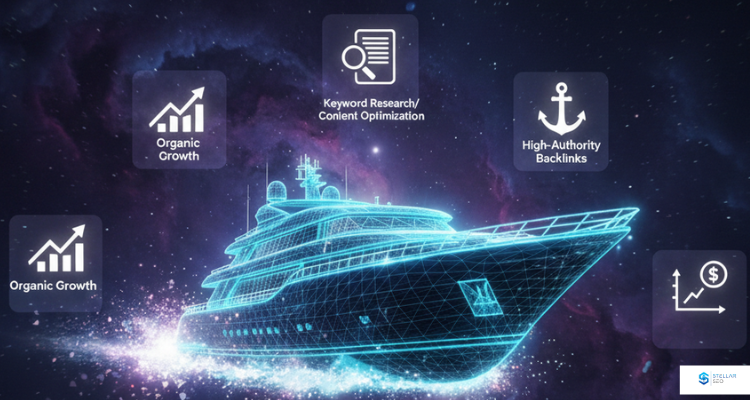









Every month, your invisible inventory costs you more than SEO ever will. Floorplan pressure climbs, margins shrink, and boats that should have sold are sitting because qualified traffic never finds them.
And here is the part most dealerships never consider.
If your preferred marketplace or listing platform shut down tomorrow, how many leads would disappear? Most boat dealers would lose more than half overnight.
With rising competition from brands like Sea Hunt, Boston Whaler, Grady-White, and Bennington across high-demand regions like Florida, Texas, and the Carolinas, relying on a single channel is a risk you cannot ignore.
Here is what the numbers say in 2025: the U.S. marine market still moved over 55 billion dollars in boating-related sales in 2024. More than 238,000 new powerboats changed hands, and nearly 860,000 pre-owned vessels were sold. But new-boat retail is down almost 10 percent this year, and total powerboat sales are down over 7 percent, indicating that buyers are still searching, but many are holding off. That means every visitor you lose is a qualified lead someone else may capture.
If your dealership is not competing in search engines, Google Maps, and AI-driven channels, you are already missing half the battle.
This guide shows how to build visibility you control through structured SEO, strategic authority signals, and a comprehensive digital marketing strategy.
When these elements work together, your dealership becomes less dependent on paid ads and increasingly visible in search engines, Google Maps, and AI-driven sales paths.
Why SEO for Boat Dealers Determines Who Sells the Most Boats
Today’s marine buyers begin online. Users search for fishing boats, pontoon boats, deck boats, dual consoles, center consoles, and engine packages before setting foot in a dealership. They compare options within a region, check marina availability, review service centers, and study ownership costs for Yamaha outboards, Mercury engines, and similar platforms.
When your site ranks during this early phase, you control the narrative. When you do not rank, a nearby dealership gets the call. SEO improves online presence, increases qualified traffic, and strengthens your ability to sell boats directly from your website.
How Search Engines Decide Which Boat Dealership Gets the First Call
Search engines like Google and Bing evaluate hundreds of factors, including keyword usage, structured data, content depth, website speed, backlinks, page experience, and mobile-friendly design. They also analyze user behavior, including how long visitors stay on pages and whether they navigate deeper into your site.
If your website is slow, thin, outdated, missing model-specific content, or lacking authority, search engines push other dealerships ahead of you. Visibility belongs to inventory pages and dealership websites that give users complete information and help them navigate easily across all devices.
What Boat Dealers Must Fix First to Improve Visibility and Traffic
Most boat dealer websites struggle because core information is fragmented or incomplete, which makes it difficult for both users and search engines to understand inventory, services, and location context. Model and brand pages are often missing, forcing inventory to compete on generic listings rather than dedicated pages that explain what is actually available. Location signals tend to be weak or inconsistent, especially when marina proximity, service areas, and regional boating activity are not reinforced across the site. Inventory pages frequently load slowly, navigation paths are outdated, and mobile layouts interrupt the buying or inquiry process before a visitor reaches a contact point.
Service offerings are often underexplained or buried on the site, while key pages lack sufficient substance to clearly describe buying options, storage, maintenance, or financing. Internal linking rarely connects inventory, services, and location pages in a way that reflects how customers actually browse, which limits crawl efficiency and user movement. Authority signals are usually minimal, with few quality backlinks supporting the site’s relevance. These same weaknesses often extend to Google Business Profiles, where incomplete information, unmanaged reviews, and outdated details reduce local visibility and suppress demand that would otherwise convert.
Addressing these issues improves how traffic moves through the site and clarifies relevance at every level. Visitors reach the pages they expect to find, search engines can accurately interpret inventory and location signals, and lead volume improves because unnecessary friction has been removed from the path to contact.
Optimizing Your Google Business Profile to Win Local Searches
Local search visibility depends heavily on the completeness and accuracy of your Google Business Profile, particularly for searches tied to boating, marinas, and service access. Categories should reflect actual inventory and services; business descriptions should explain what the dealership sells and supports; and service lists should be comprehensive rather than selective. Operating hours and contact details should remain current, and photos should consistently reflect available inventory rather than outdated or generic images.
Location references perform best when they include nearby marinas, waterways, and realistic service areas, rather than relying solely on city names. Regular updates signal activity, and review responses reinforce credibility. Reviews that include specific boat models, service work performed, marina references, or photos contribute meaningful long-tail relevance and strengthen map placement organically. Over time, a properly maintained profile becomes one of the most reliable sources of qualified local traffic for a dealership.
Building an SEO Strategy That Reduces Floorplan Pressure
A strong seo strategy reduces aging inventory and improves your ability to sell boats year-round. Stellar SEO builds this strategy using two proprietary systems.
- The Authority Content System. This system structures your site around how marine buyers search. We create content clusters that include brand hubs, model pages, pricing guides, fishing resources, ownership tips, waterway guides, marina content, trim comparisons, and educational blog post topics, all supported by long-tail keywords.
Dealers using this system gain qualified traffic because their pages mirror buyer intent.
- The Authority Signal Framework. Search engines rely on authority signals to determine trust. We build high-value backlinks from marine magazines, marina directories, regional lifestyle publications, tourism sites, angler communities, and local business organizations. These signals confirm your dealership’s expertise and dramatically strengthen your ranking stability.
Both systems reduce floorplan pressure by increasing visibility for each key model, brand, and service.
How Much Does Boat Dealer SEO Cost?
Boat dealer SEO campaigns typically range from $2,500 to $7,500 per month, depending on inventory size, service areas, content needs, and the level of competition in your region. Dealers with multiple locations or large brands usually require deeper content clusters and stronger authority signals, which affects overall cost.
For a full breakdown, including pricing models and common budget ranges, read our complete guide on How Much Does Boat Dealer SEO Cost?
Turning Your Boat Dealership Website Into a Lead Generator
Your boat dealership website must generate leads, not simply showcase inventory. A well-built site:
- loads quickly across all devices
- features mobile-friendly layouts
- offers clear navigation
- lists services offered
- provides complete information for every boat
- integrates simple form fills and call buttons
- displays updated photos and videos
- connects visitors to relevant pages
- keeps users engaged with structured content
A better website structure increases conversions, reduces bounce rates, and helps search engines better understand your inventory.
Local SEO That Helps Buyers Find You Before Competitors
Local SEO determines how often your dealership appears for queries like “boat dealer near me,” “pontoon boats in Charleston,” or “used center consoles Orlando.” It influences visibility in Google Maps, Bing Places, and local searches tied to marinas, waterways, and neighborhoods.
Strong local SEO means more foot traffic, more test drives, more qualified leads, and more customers choosing your dealership directly.
Keyword Research That Matches How Real Buyers Search for Boats
Marine buyers search with intent. Keyword research identifies what potential customers are looking for, including:
- fishing boats under specific price ranges
- pontoon boats for lakes or rivers
- engine package preferences
- boat brands tied to local waterways
- Marina-friendly boat sizes
- service and maintenance needs
- “for sale” searches by city or zip code
We target long tail keywords tied to buyer intent across high-value regions and optimize your pages for these searches, improving visibility and qualified traffic.
How to Create Content That Attracts Qualified Traffic and Sales?
Content that generates qualified leads works because it answers the questions buyers actually ask as they research boats, ownership costs, and long-term value. Brand and model overview pages give buyers a starting point to understand differences between manufacturers and use cases, while pricing comparisons and trim-level breakdowns help narrow options without forcing a sales conversation too early. Engine comparison content supports buyers who care about performance, fuel efficiency, and maintenance expectations, especially when multiple power options exist for the same hull.
Service and maintenance guides address ownership concerns that often delay purchasing decisions, while financing and insurance resources remove uncertainty around affordability and long-term costs. Local boating and marina guides help connect inventory to real-world usage, making the dealership feel relevant to the buyer’s location and habits. Blog content performs best when it supports these core pages by helping users work through decisions rather than pushing promotions. When content is structured around these needs, it improves search visibility, supports natural navigation, and strengthens overall site authority without relying on generic sales language.
Using Digital Marketing to Support Your SEO and Increase Online Visibility
Digital marketing works best when it reinforces search visibility instead of competing with it. Organic search provides the foundation, while paid ads fill short-term gaps or support seasonal demand when needed. Email follow-ups keep leads engaged after initial contact, and remarketing campaigns maintain visibility during longer buying cycles that are common in the boating market. Social media content supports brand recognition and keeps inventory and services visible outside of search results.
Branding efforts and seasonal promotions help align messaging across channels, while analytics data provides clarity on what content, traffic sources, and campaigns actually drive inquiries and sales. When these elements work together, they extend the reach of SEO, improve conversion rates, and increase visibility across search platforms and social channels without fragmenting the strategy.
Web Design Improvements That Help Users Search, Navigate, and Convert
Good web design supports the entire buyer journey. Your site must be mobile-friendly, intuitive, and easy to browse. Visitors expect fast load times, clean navigation, and consistent inventory updates.
Stronger web design leads to more form fills, more phone calls, and more qualified leads without increasing ad spend.
How Social Media Strengthens Your SEO and Reaches New Customers
Social media supports SEO by driving traffic and engagement. Posting inventory walk-arounds, team introductions, customer testimonials, and service department highlights increases reach and builds credibility.
When combined with strong on-site content, social media drives more customers to your dealership and supports your digital marketing strategy.
What We Learned After Reviewing 150 Boat Dealer Websites
After analyzing more than 150 dealership websites across the United States, including those selling center consoles, pontoon boats, bay boats, deck boats, and offshore fishing models, we identified the same pattern among top-ranking dealers.
- They created structured content clusters tied to real buyer behavior.
- They earned marine-relevant authority signals from legitimate boating sources.
- They invested in complete local SEO profiles and consistent online reviews.
Dealers following these patterns had stronger keyword rankings, more qualified leads, and far more stable online visibility. These findings directly shaped our Authority Content System and Authority Signal Framework, making them the most predictable way to increase sales and reduce reliance on paid ads.
Marine Case Study: Center Console Dealer Increased Organic Leads by 187 Percent
A multi-location center console dealer relied heavily on paid ads and marketplaces. Their content was thin and their site slow.
We built brand hubs, model pages, fishing guides, pricing pages, and marina content. We secured authority signals from marine organizations, regional publications, and coastal tourism sites.
Lead volume grew by 187 percent. Qualified traffic increased more than four times. Aging inventory moved faster.
Marine Case Study: Pontoon Dealer Reduced Aging Inventory by 31 Days
A pontoon dealer with weak local SEO struggled to move units, especially during shoulder seasons.
We rebuilt their Google Business Profile, encouraged customer reviews, added lake-specific content, and optimized location pages tied to nearby marinas.
The inventory aged 31 fewer days on average, and its Google Maps visibility surged.
Marine Case Study: Performance Dealer Increased Sales Inquiries by 212 Percent
A performance boat dealership selling fast, premium boats lacked a model structure and authority signals.
We created detailed content tied to performance boats, ownership, engine comparisons, and maintenance. We also secured authority links from performance boating groups and local media.
Sales inquiries increased by 212 percent, and the dealership achieved stable rankings for mid- and bottom-funnel searches.
Related: Check out our yacht lender case study.
Why These Case Studies Matter for Your Dealership
Dealers succeed when they follow the same proven structure:
- content that mirrors buyer behavior
- authority signals from marine sourceslocal SEO with complete profiles
- long tail keywords
- page structure that converts
This is the structure that moves boats in today’s market.
Dealers that follow this framework see predictable gains in visibility, leads, and boat sales because it is built around how real marine buyers search and make decisions. To explore how these strategies apply to your dealership, visit our marine link building services page.
Frequently Asked Questions
Dealers often ask us the following questions when planning or evaluating their SEO campaigns.
- How long does boat dealer SEO take to work?
Most dealerships see meaningful traffic and ranking improvements in three to six months once the correct structure is in place. SEO for yacht brokers can take longer, due to the higher competition.
- Do I need content even if I already pay for paid ads?
Yes. Content and SEO reduce reliance on paid ads and drive qualified traffic that continues even as ad spend is reduced.
- How important are online reviews for my boat dealership?
Reviews are one of the strongest local ranking factors and can significantly increase Maps visibility and trust.
- Why do I need long tail keywords if I already rank for broad searches?
Long-tail keywords capture high-intent buyers who are comparing specific models, budgets, and locations, resulting in more qualified leads.
- What role does my website’s speed and mobile performance play?
A fast, mobile-friendly site improves user experience and is a major SEO factor that boosts rankings and conversions.
Take the First Step Toward Stronger Visibility and Faster Boat Sales
Most boat dealers, yacht brokers, and marine finance companies lose high-intent buyers because their site structure is unclear, their content does not match buyer behavior, or their authority signals are weak. Once these gaps are fixed, visibility grows, traffic improves, and inventory moves faster.
If you want a clear breakdown of where your dealership is losing visibility and how much you could gain, we will audit your website, review your rankings, check your local SEO footprint, and map out the opportunities you are missing.
You will receive a clear, personalized marine SEO plan tailored to your brand’s, region’s, and inventory goals.
If you want more qualified leads without increasing ad spend, request your assessment, and we will show you exactly where your dealership can win.